Strategy · Service Design · Product · AI Experience
Made with
AIE Innovation Lab · Capgemini Brazil
Category
AI Product · Multi-platform Service
Status
In-store MVP shipped · full roadmap for app & catalog
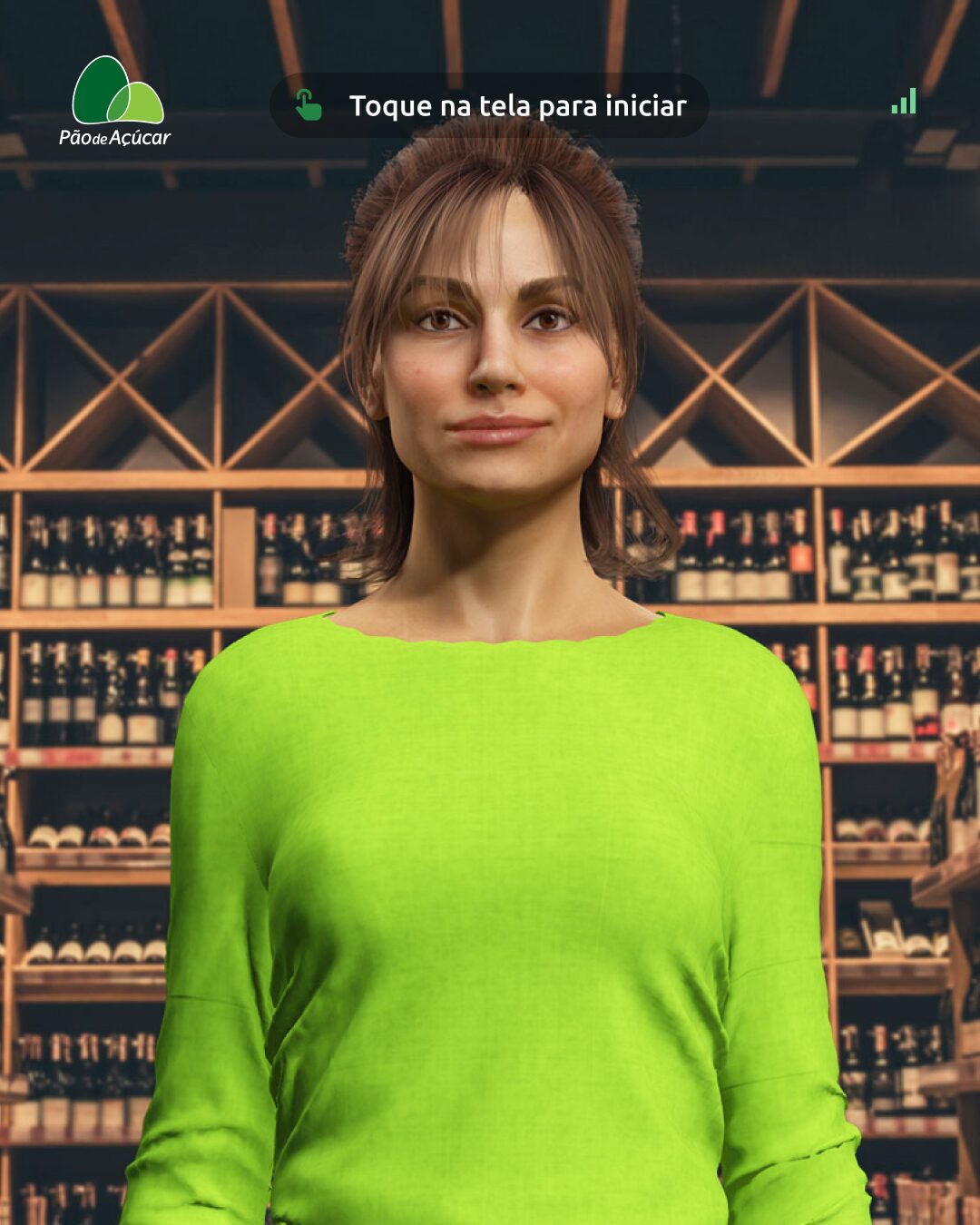
hero-portrait.jpg
8 weeks
Kickoff to live in a real store.
Largest in Brazil
GPA's wine business, the market Paola was built to serve.
Roadmap
11 features mapped across totem, site and app, from CPF-based personalization to magic search.
The Reason
The brief
An open question about AI, answered with wine
It started in a client meeting at GPA in 2023, with the AI hype cresting. The retailer arrived with an open question: how can we use this? No spec, no wireframe, no predetermined use case.
Wine wasn't a hunch. It surfaced from research and working sessions with GPA's stakeholders and our team: a large, high-consideration category where customers hesitate and floor expertise is scarce. It was also the retailer's first serious AI product bet. Gimmicky would set the whole AI strategy back. Useful would unlock a roadmap. I shaped the answer end to end, from that first room to the kiosk on the floor.
scale · why wine, why GPA
Wine category
No. 1
GPA's wine business, the largest in Brazilian retail.
Assortment
700+
Wine labels in catalog.
Supply chain
60+
Vineyards and importers.
GPA is the largest wine seller in Brazil. The category was big enough to deserve a service, not a feature.
The Strategy
The strategic call
Service, not feature
One framing decision shaped everything downstream, and it was the one I had to make stick across the room: treat Paola as a service, not a feature. Prove the concept on a physical kiosk in a real store before touching the mobile app. Let people talk to her out loud, in the actual wine aisle, before betting on a screen.
Easy to say, hard to hold. Behind the framing sat a coordination problem: one consistent Paola across four areas of GPA at once. Marketing (brand voice, avatar build, naming poll), IT (data, integrations, agent orchestration on Azure), Legal (AI governance and customer-interaction policy), and the wine category and store ops (assortment logic, pilot store, floor-staff training). Products at this scale usually fail at the coordination layer, not the model layer.
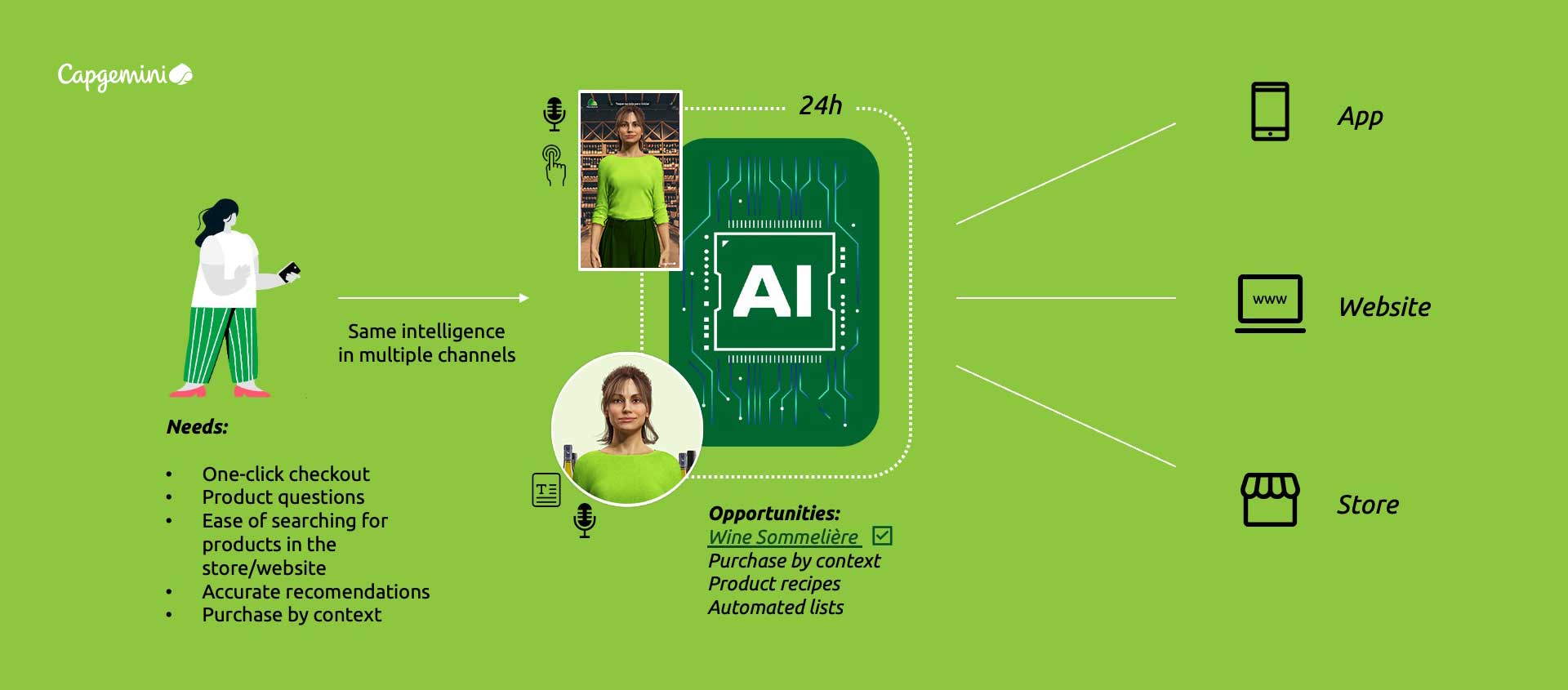
strategy · same intelligence, multiple channels · pitch slide
strategy · channels
The case for "service, not feature" in one frame. Customer needs, one intelligence, three channels, and Wine Sommelière selected as the MVP.
The Process
Discovery
The perfect wine for you… today.
Discovery ran from inside the client's building: interviews with category leads, store ops and the wine team, then customer research in the aisles. The problem showed its shape early. Unless you already know what you want, choosing a label by grape, region, body and price is easy and boring, and it isn't how anyone actually decides.
So we stopped asking what wine someone likes and started asking what they need today. A taste profile is fixed and fits in a database; an occasion is not, and has to be asked for out loud. That one word is the argument for a conversation instead of a filter, and it set the four needs the product had to meet: one-click purchase, easier search, contextual recommendation, purchase by occasion.
“Tonight I'm having dinner alone. Tomorrow I have a date.”
Context, in a customer's own words
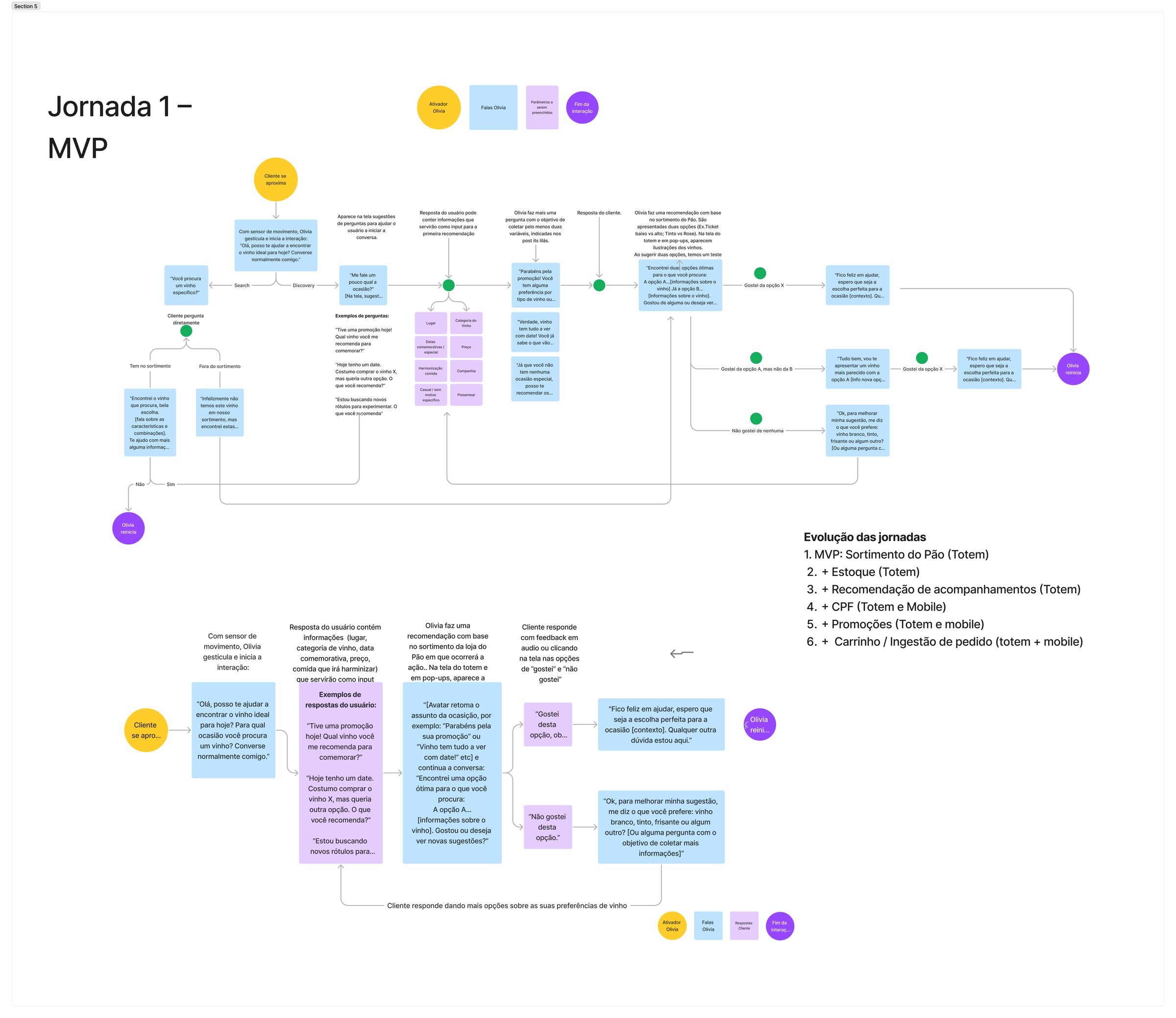
discovery · mapping the match · jornada 1. MVP · FigJam
jornadas-mvp.jpg
The canonical MVP journey, mapped node-by-node. Trigger, Olivia speaks, user response, end-of-interaction, with every branch the conversation could take. Color-coded so non-designers could follow it.
What the recommendation weighs
Five families of signal, one sentence of advice.
Three of these the customer never says out loud, one only a conversation can reach, and one belongs to the retailer. Getting them into a single reply is the actual product.
01
External factorsWeather, date, location, time of day. True before anyone speaks.
02
Variable inputsAlone or with company, budget, mood, occasion. Only a conversation gets these.
03
Wine repertoireGrape, characteristics, price, pairings. The sommelier knowledge itself.
04
Individual historyLabels bought, frequency, average ticket, stores. What earns the next visit.
05
Store interestsPromotions, live stock, partnerships, cross-sell. The retailer's side.
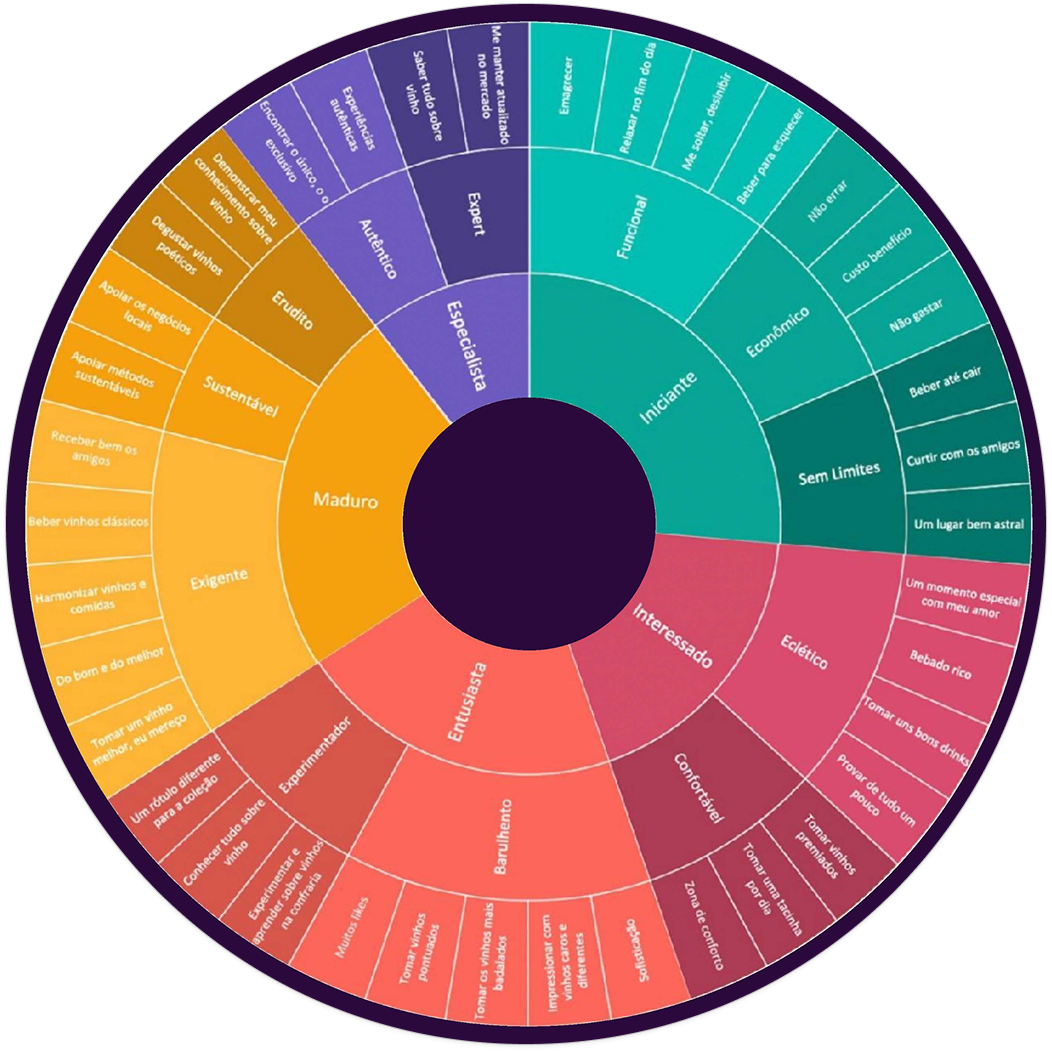
matriz.png
Eleven behavioural profiles × five phases of wine maturity. The same bottle is right for one ring and wrong for another, which is why the agent asks instead of assuming.
discovery · evolução das jornadas · roadmap
Step 01 · Totem
Sortimento do Pão
The MVP. Conversational wine sommelier on the in-store kiosk.
Step 02 · Totem
+ Estoque
Live stock awareness so recommendations match what's on the shelf.
Step 03 · Totem
+ Recomendação de acompanhamentos
Pairings. Recipes, dishes, sides. Alongside the wine pick.
Step 04 · Totem & Mobile
+ CPF
Identification carries the conversation across the kiosk and the app.
Step 05 · Totem & Mobile
+ Promoções
Personalised offers surfaced inline, not buried in a separate area.
Step 06 · Totem & Mobile
+ Carrinho / Ingestão de pedido
Cart + order intake. The conversation closes with a transaction.
The six-step evolution we mapped with GPA before the kiosk shipped. The MVP was step 1; the roadmap was already written.
Building the avatar
Built from scratch, with GPA rather than for it
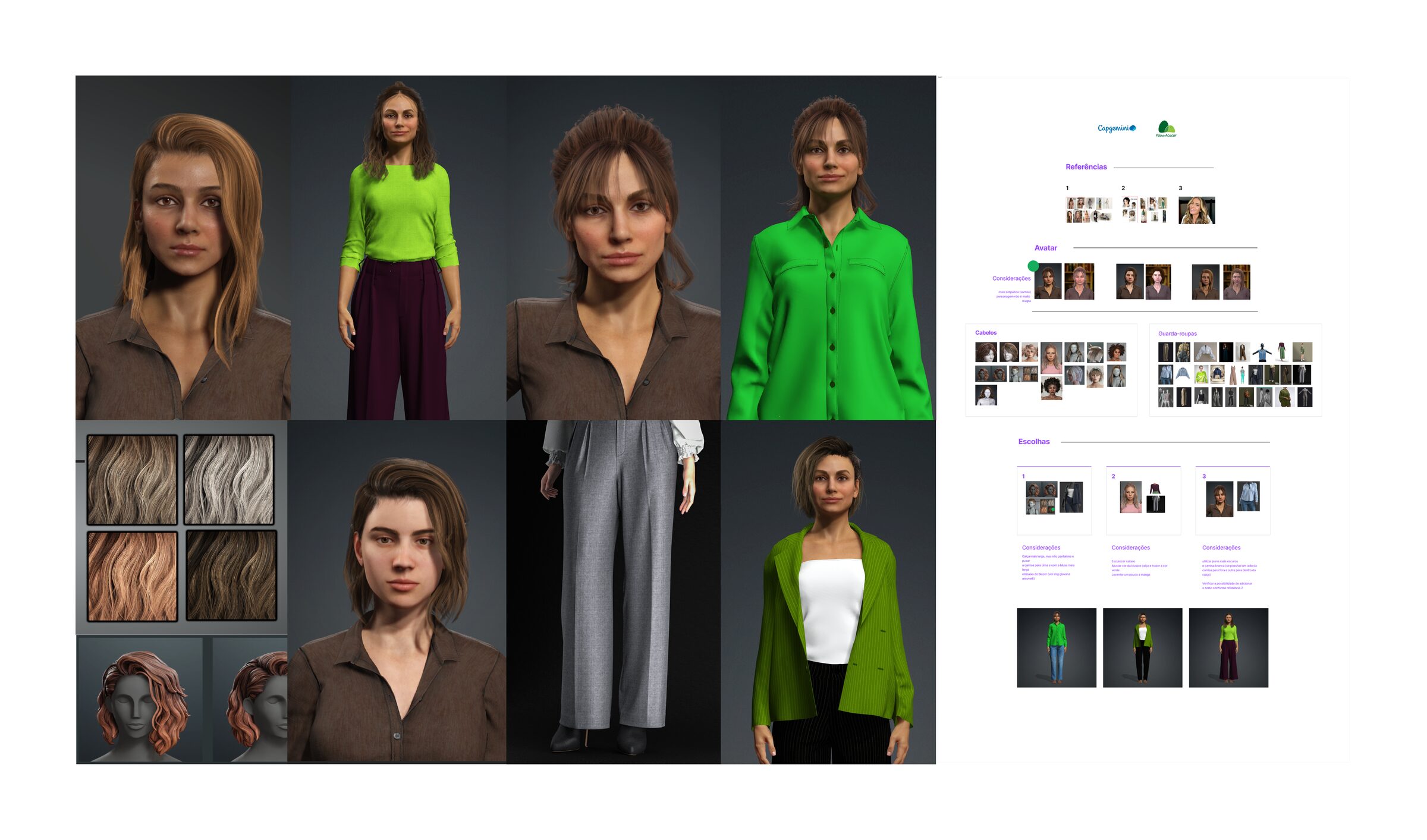
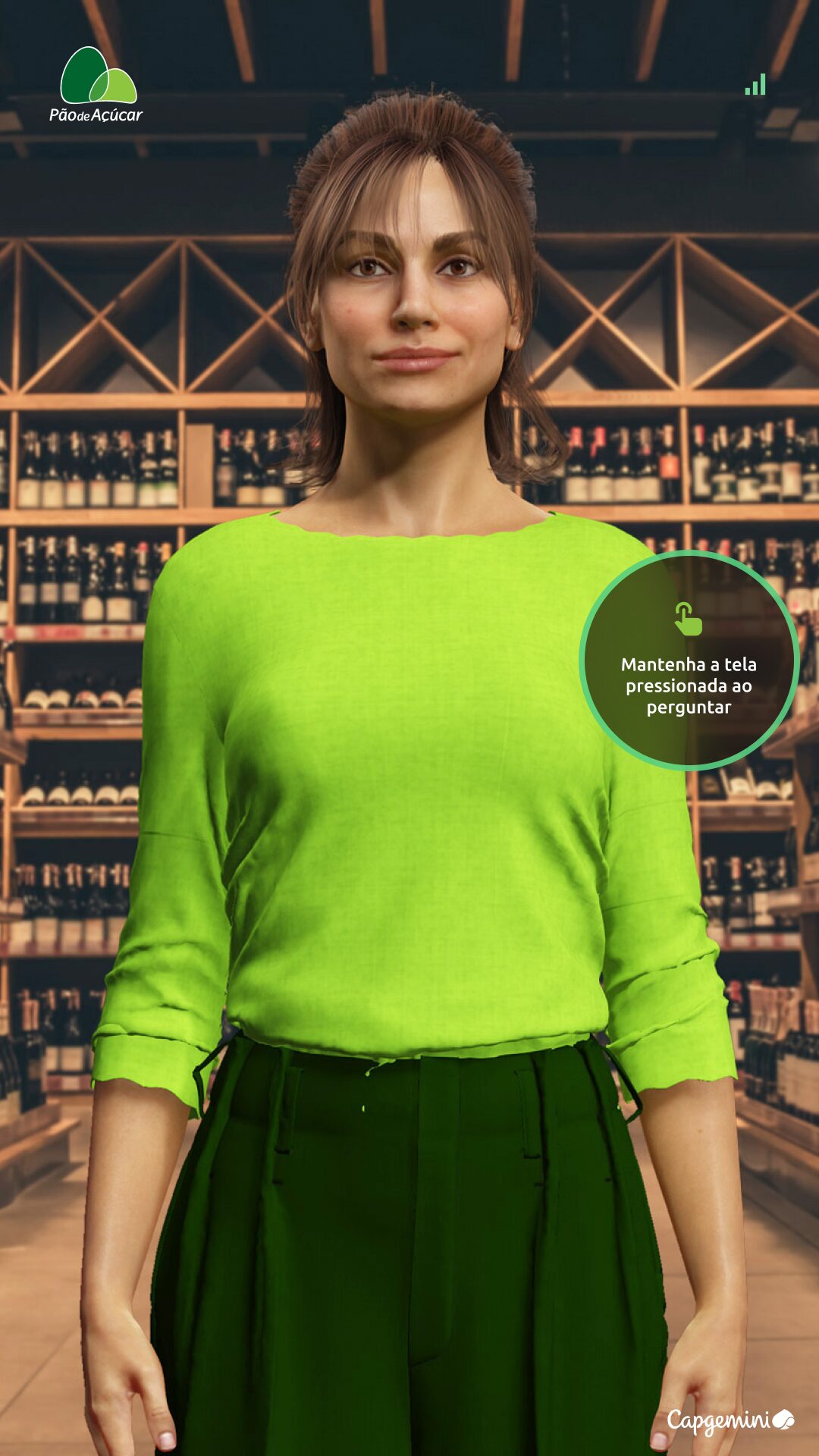
The avatar moved from references through hair and wardrobe studies to three finalist outfits and a final pick, with GPA's marketing team as the validation loop at every step. Each round came back annotated in their own words: "mais simpática (sorriso)", "escurecer cabelo", "levantar um pouco a manga". We dropped the off-the-shelf option early. Paola had to read as part of the company, not a vendor's mascot. Final direction: green sweater, plum wide pants. Reads as Pão de Açúcar on any surface without a logo doing the work.
The name came from inside the company too. The pitch went in as Club des Sommeliers. GPA ran an internal employee poll and Paola won. The voice was negotiated the same way, across marketing, IT and legal.
avatar · exploration → final
avatar · exploration board
References → hair and wardrobe studies → three finalist outfits → marketing review → green sweater with plum wide pants.
The pitch
The journey video
I directed the pitch video that carried the strategic call into the C-level room. Same team, same week, different language: less deck, more film.
video · executive pitch · vimeo
The video that moved the executive pitch from spec sheets to felt experience.
The architecture
One agent, every surface
With the strategy bought, I worked alongside the engineering leads on the system that would carry her across surfaces. One agent, multiple endpoints: kiosk in store, tablet at the counter, mobile app for browsing at home. Each surface tuned to its context, all of them speaking with one voice.
The MVP was built on Capgemini's Olivia asset. Re-skinned, re-named, re-trained. Orchestration on Azure OpenAI, cognitive search against GPA's Whitelabel Wine API, and phoneme correction on the top grape varieties so "Tempranillo" comes out right. I sat between design, GPA's IT and the engineering pod to keep experience and stack in step.
architecture · multi-surface stack
Paola · Unity · Azure OpenAI · GPA Whitelabel API
01 · Surface
Unity + Touch totem
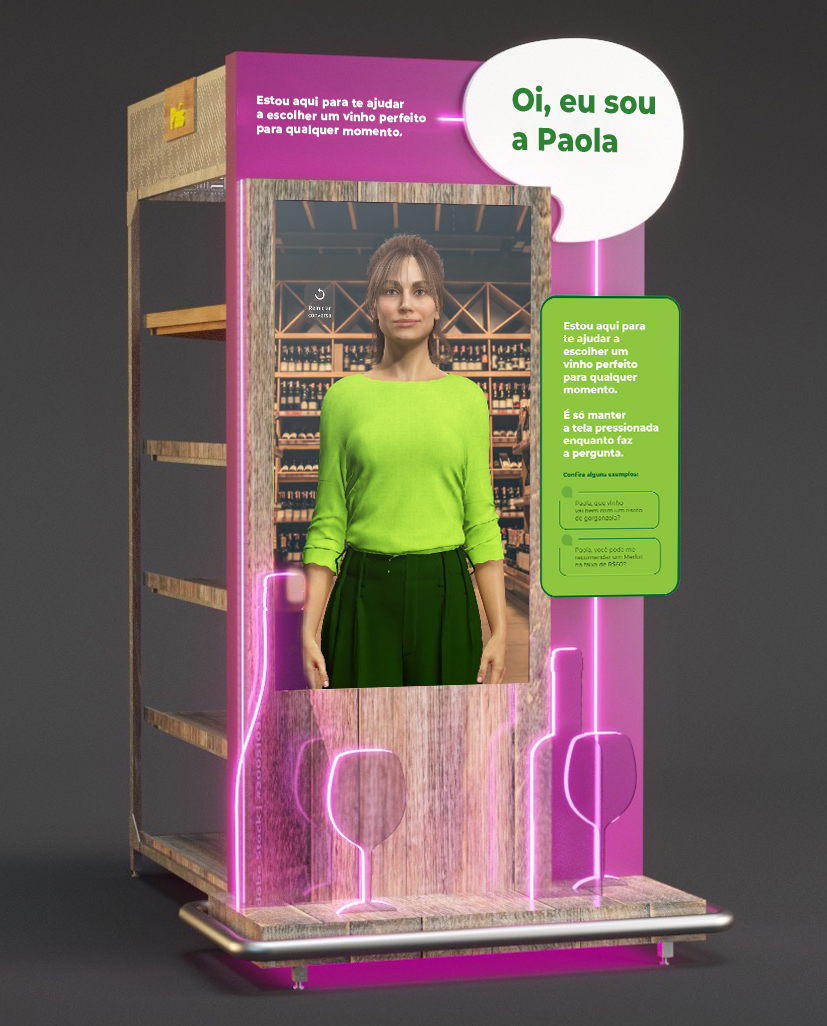
55" screen + 4K cam + motion sensor. Mobile companion. Front-end in Unity.
02 · Brain
Azure OpenAI · Paola
Prompt-tuned per surface. Phoneme correction on grape types. One personality, three contexts.
Built on top of Capgemini's Olivia avatar asset. Customized end-to-end for GPA.
Paola is one agent across many surfaces. The architecture lets every endpoint feel native to its context, while the brain stays consistent.
The kiosk experience
Five screens before the first recommendation
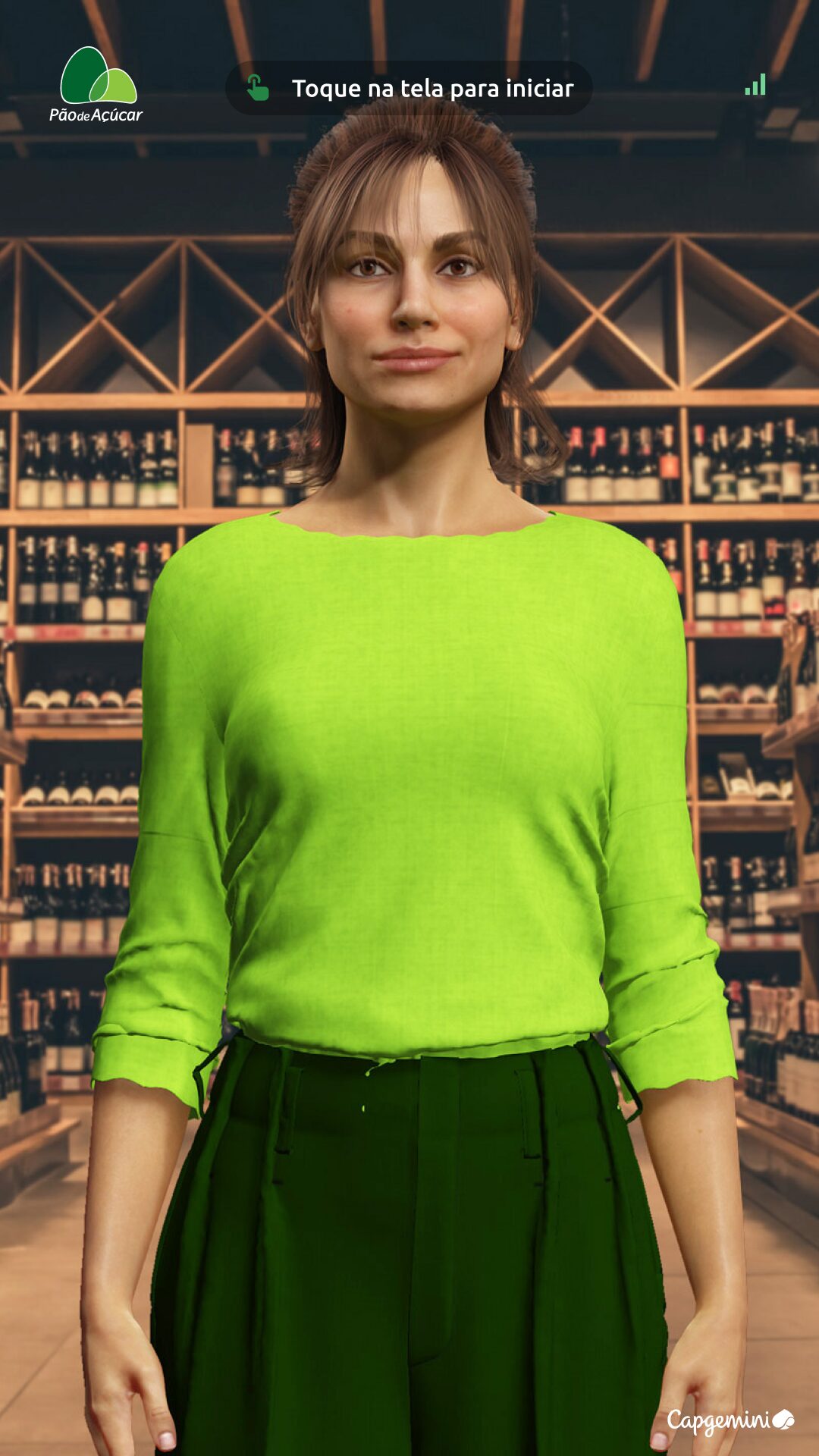
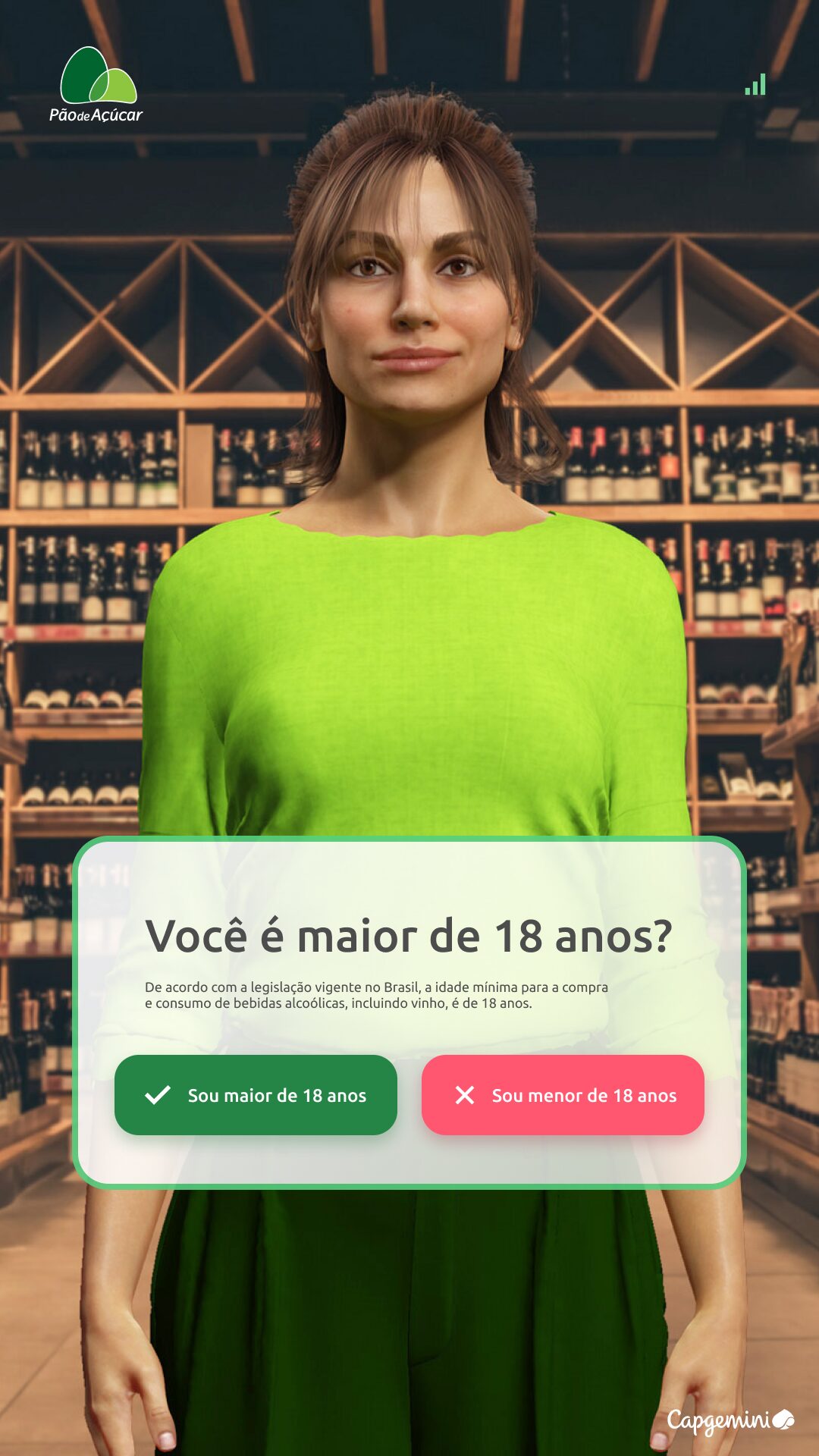
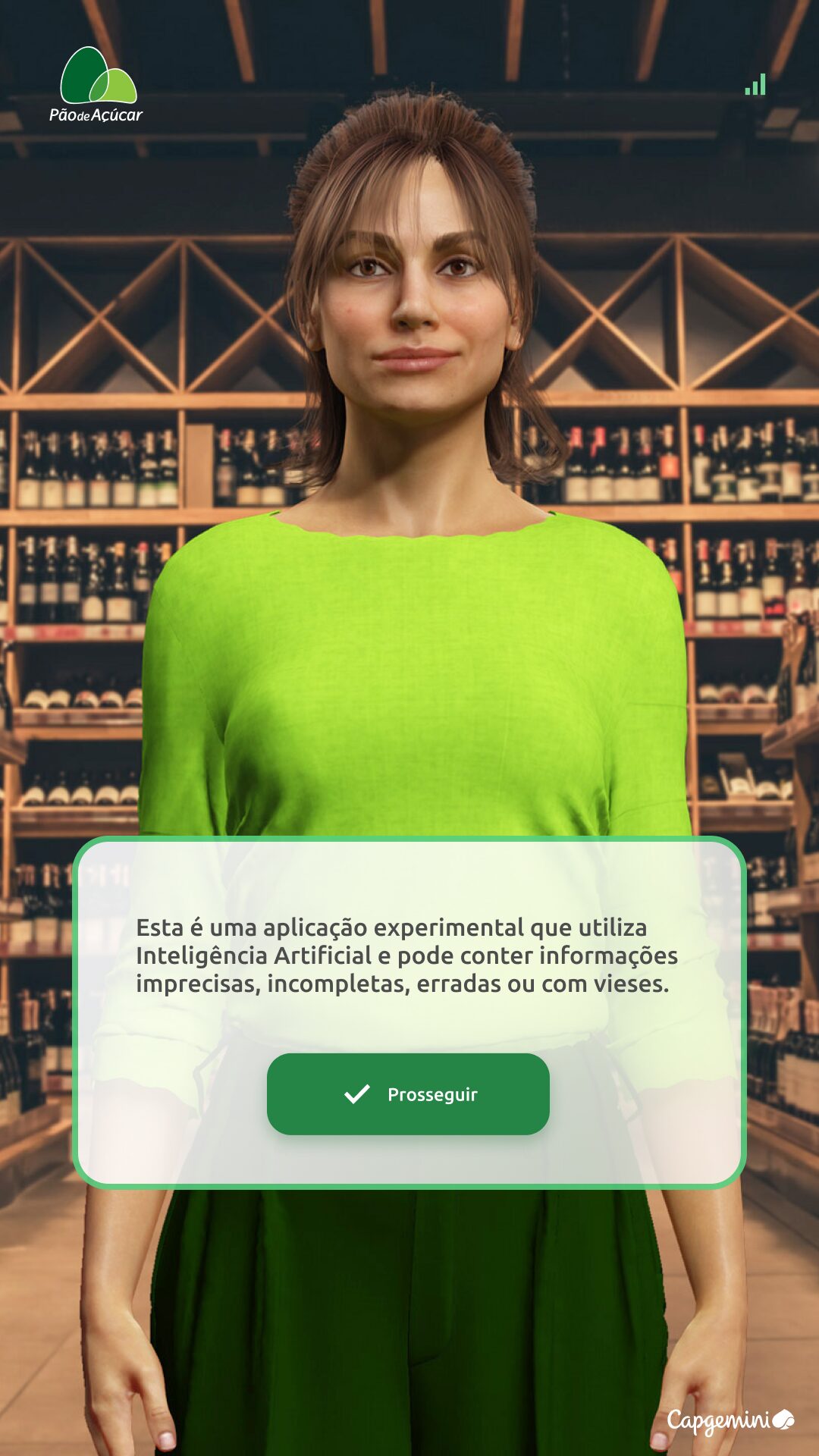
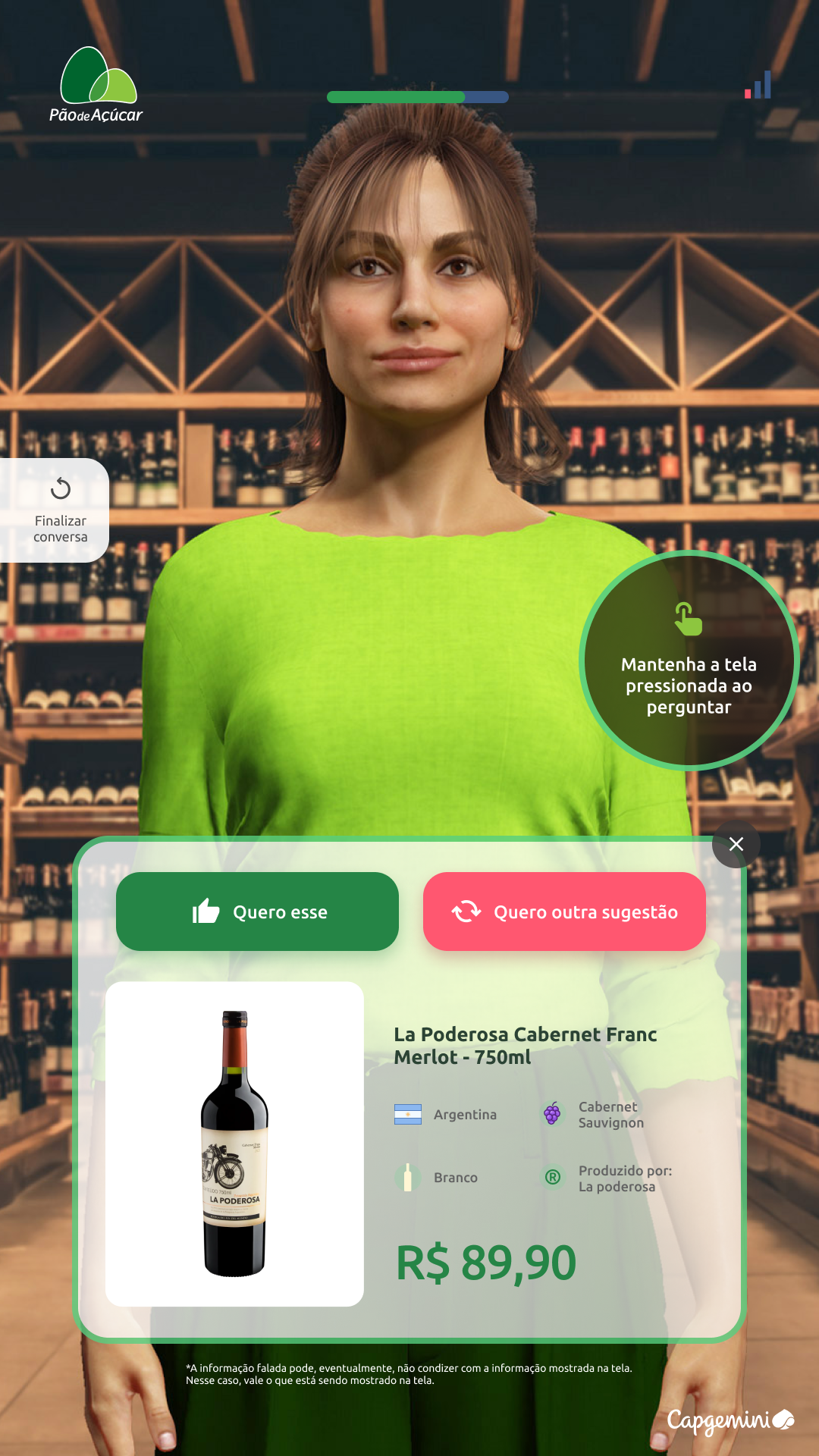
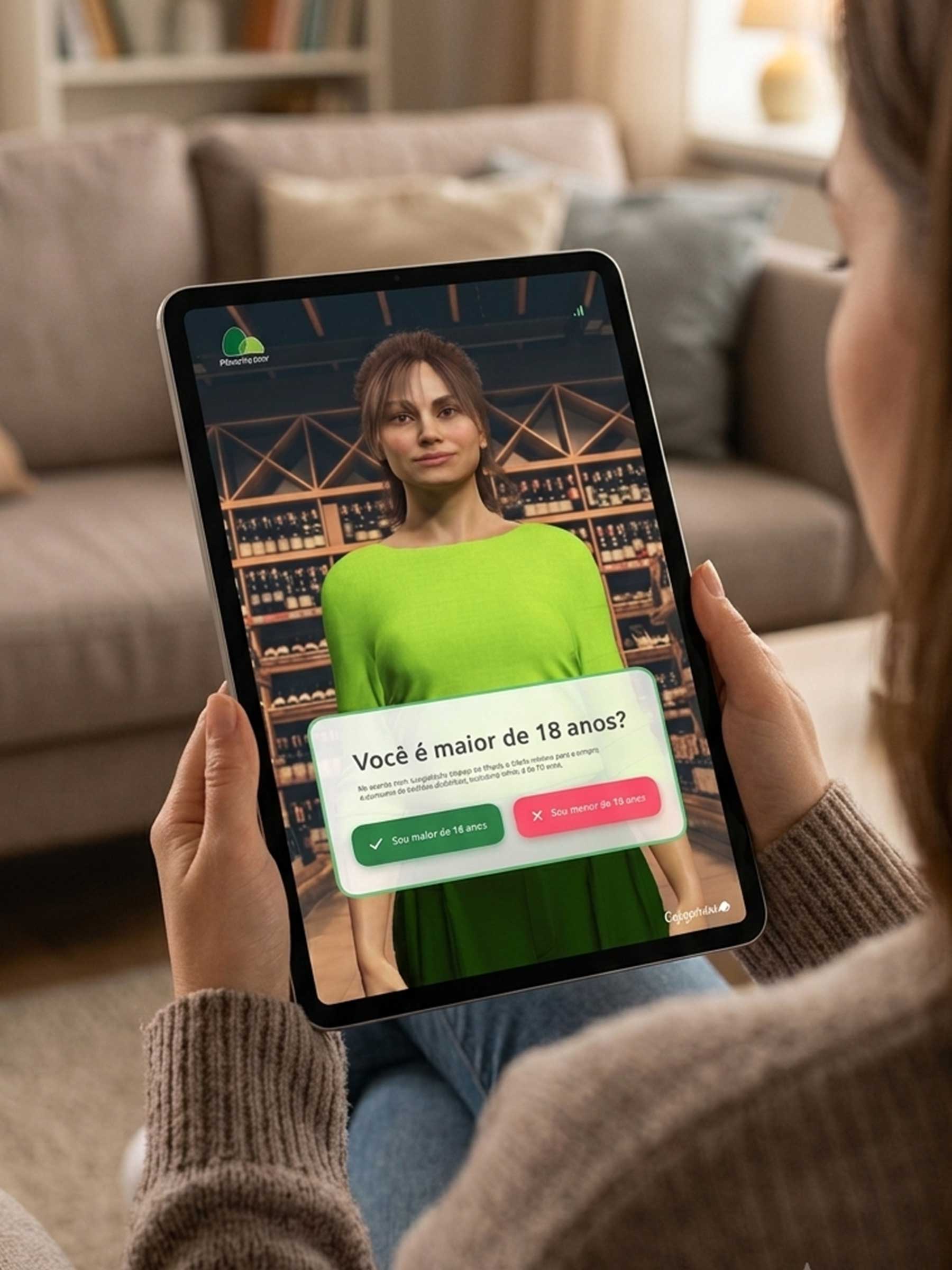
Before the AI gets a turn, the totem has real UX work to do: age check, legal disclaimer, press-and-hold mechanic, none of which can feel like a gate. From there Paola listens and recommends, and two buttons carry the whole decision loop: "Quero esse" / "Quero outra sugestão".
signature · kiosk UX · totem · 5 screens
ui-01-welcome
ui-02-age
ui-03-disclaimer
ui-04-listening
ui-05-result
Welcome → 18+ check → AI disclaimer → mic instruction → result card. The UX bracket around the AI, without which the AI doesn't get its turn.
Multi-platform by design
Designed for every surface, shipped in-store first
deployment · triptych · 3-up
kiosk-totem
paola-tablet.jpg
The MVP shipped to a real store first. Learning from people in front of actual wine, not a usability lab. Tablet and mobile are the roadmap's next surfaces.
The Results
Outcome
Eight weeks in a real aisle
The MVP shipped in store in eight weeks and proved the concept in front of real customers. On the strength of it we mapped a full roadmap: new capabilities layered onto the same agent, expansion from the kiosk to the mobile app, and a bigger slice of GPA's catalog for Paola to advise on.
The work didn't stop at the avatar. It became a playbook. Magic search, contextual upsell, recipe pairing, post-purchase advisory, entry-level wines. Each one a tile in the roadmap, each one designed to ship on the substrate the MVP proved.
Eight weeks after kickoff, GPA had a working sommelier live in a real aisle, and a mapped path to scale it across site, app and catalog.
Credits
Client · Pão de Açúcar (GPA)
Team · AIE Innovation Lab · Capgemini Brazil
Strategy, service & product design · Davi Serrano, with the AIE team